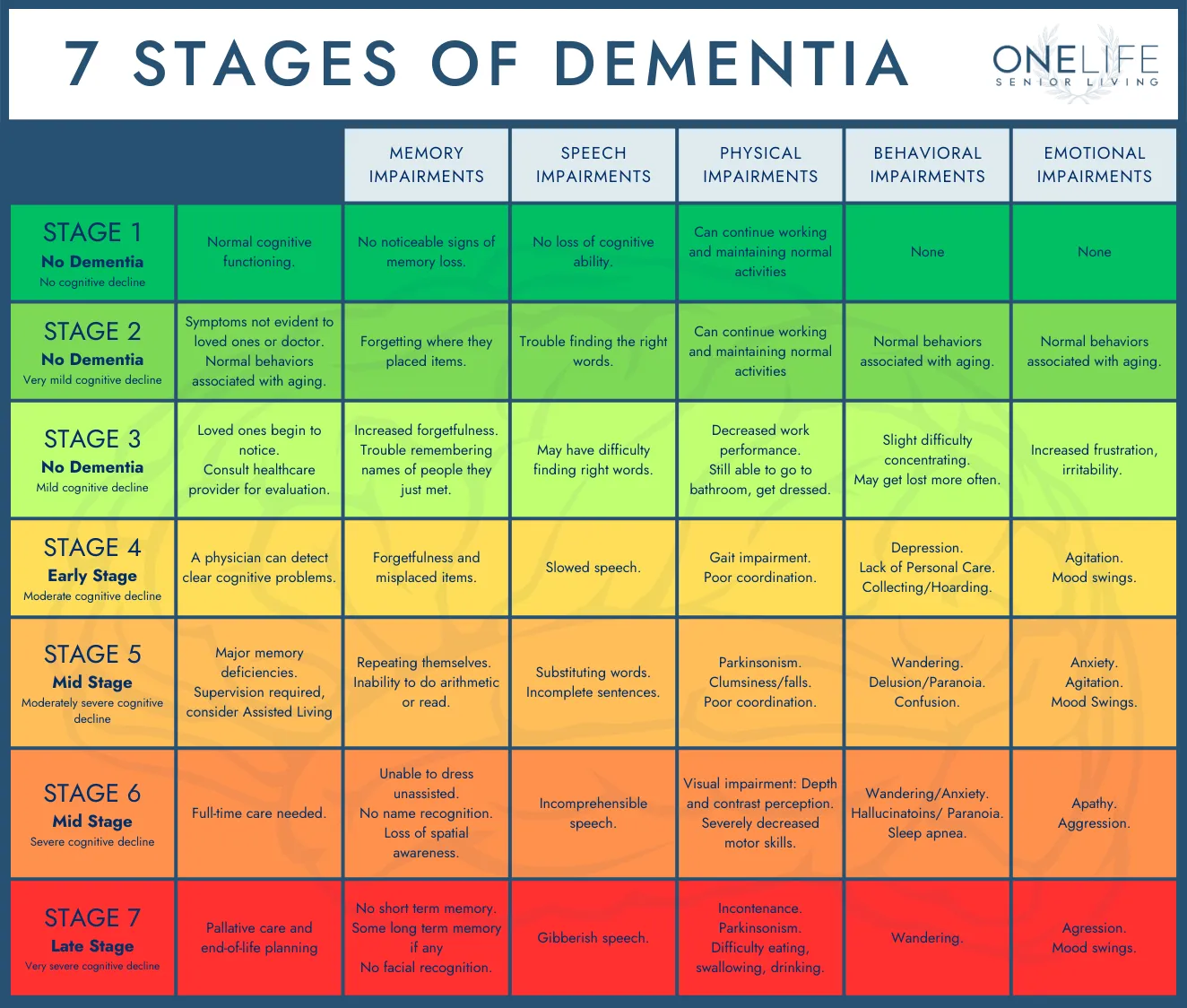
Dementia is a progressive condition, and symptoms typically worsen over time. While the rate of decline varies, certain signs can indicate that dementia is advancing and that additional care may be needed. Recognizing these changes early can help families prepare, adjust care plans, and ensure their loved one remains safe and supported.
Signs Dementia Is Progressing at a Glance
- Increased memory loss and confusion
- Difficulty with daily tasks
- Changes in behavior or personality
- Trouble communicating
- Increased safety concerns
- Greater need for supervision and care
TABLE OF CONTENTS
In this guide:
- Common signs dementia is getting worse
- How symptoms change over time
- When to consider more support
- How families can respond
HOW TO KNOW IF DEMENTIA IS GETTING WORSE
Dementia progression often happens gradually, but changes can become more noticeable over time. Families may begin to see new symptoms or worsening of existing ones, especially as individuals move from early to middle or late stages.
👉 Learn more about the full progression in our guide to the 7 stages of dementia (insert internal link)
COMMON SIGNS DEMENTIA IS PROGRESSING
1. Increased Memory Loss
Forgetting recent events, names, or familiar routines becomes more frequent and noticeable.
2. Difficulty with Daily Tasks
Tasks that were once manageable—like dressing, cooking, or managing medications—may become overwhelming.
3. Changes in Behavior or Personality
- Increased anxiety or agitation
- Mood swings
- Withdrawal from social interaction
Is behavior change normal in dementia?
Yes, personality and behavior changes are common as dementia affects different parts of the brain.
4. Trouble Communicating
Individuals may:
- Struggle to find words
- Repeat themselves frequently
- Have difficulty following conversations
5. Increased Confusion and Disorientation
- Getting lost in familiar places
- Confusion about time or location
- Difficulty recognizing people
6. Decline in Physical Abilities
As dementia progresses, physical changes may include:
- Difficulty walking
- Increased risk of falls
- Trouble eating or swallowing
👉 Learn more about what to expect in late-stage dementia
7. Increased Safety Concerns
- Wandering
- Leaving appliances on
- Forgetting to lock doors
- Difficulty managing medications
HOW SYMPTOMS CHANGE OVER TIME
As dementia advances, symptoms shift from mild cognitive challenges to more severe impairments.
- Early stage: subtle memory issues
- Middle stage: increased confusion and need for support
- Late stage: significant cognitive and physical decline
👉 Explore how long each stage of dementia lasts
WHEN TO CONSIDER MORE SUPPORT
Recognizing when additional care is needed is one of the most important—and difficult—decisions families face.
It may be time to consider more support if:
- Safety becomes a concern
- Daily care needs increase significantly
- Caregiving becomes overwhelming
- Behavioral changes become difficult to manage
When is it time for memory care?
When a loved one’s safety, health, or quality of life can no longer be maintained at home, memory care may provide the structured support they need.
HOW FAMILIES CAN RESPOND
As dementia progresses, small adjustments can make a big difference:
- Establish consistent routines
- Simplify daily tasks
- Provide reassurance and calm communication
- Introduce structured activities
👉 Structured activities for people with dementia can help reduce anxiety and improve engagement.
YOU’RE NOT ALONE
Watching dementia progress can be emotionally challenging. Many families experience uncertainty about what to do next—but understanding the signs can help you take the next step with confidence.
In memory care communities, trained caregivers, structured routines, and personalized support can help individuals navigate each stage safely and comfortably.
RELATED TOPICS
- Understanding the 7 stages of dementia
- How long each stage of dementia lasts
- How fast dementia progresses
- Late-stage dementia: what to expect
FREQUENTLY ASKED QUESTIONS
What are the early signs dementia is getting worse?
Increased forgetfulness, confusion, and difficulty completing familiar tasks are common early signs of progression.
Does dementia always get worse quickly?
No, progression varies. Some individuals decline slowly over several years, while others may experience faster changes.
What is the biggest sign dementia is advancing?
A noticeable increase in dependence for daily activities and safety concerns is often a key indicator.
Can dementia symptoms suddenly worsen?
Yes, illness, stress, or environmental changes can sometimes cause a sudden decline.
If you’re noticing signs that dementia is progressing, it may be time to explore additional support options. Visiting a memory care community can help you better understand what level of care is appropriate for your loved one.
Choosing the Right Care for Your Loved One
Selecting the right senior care community for your loved one is an important decision, and at ONELIFE Senior Living, we are here to guide you through every step of the process. We understand that navigating options for assisted living and memory care can feel overwhelming, but our compassionate team is ready to provide the support and information you need to make the best choice for your family.
Our approach begins with carefully assessing your loved one’s unique needs and circumstances. With a variety of communities offering distinct amenities and care services, we help match your family member to the environment and level of support that will best enhance their quality of life. For those with memory-related conditions, we craft personalized memory care plans that address their specific challenges while promoting dignity, comfort, and engagement.
Whether you’re exploring assisted living for help with daily activities or specialized memory care for Alzheimer’s or other forms of dementia, we’ll work closely with you to determine the most beneficial care path. If you’re unsure where to start, we invite you to contact us to schedule a consultation with our team. Together, we can discuss your loved one’s needs, explore our services, and provide guidance to help you make a confident, informed decision. At ONELIFE Senior Living, we’re here to ensure your loved one receives the exceptional care they deserve.
Explore ONELIFE Communities Near You
ONELIFE Senior Living is proud to serve families in multiple regions, offering exceptional care and support tailored to each resident’s needs. In Springfield, Oregon, The Esther at Riverbend Assisted Living provides personalized assisted living services, while The Rawlin at Riverbend Memory Care specializes in compassionate Alzheimer’s and dementia care. Families in Salem can find trusted support at Battle Creek Memory Care, and those in Beaverton benefit from the warm, secure environment at Waterhouse Ridge Memory Care.
For families in Nevada, Vineyard Henderson Memory Care offers expert dementia care in the heart of Henderson, while in California, The Reserve at Fountaingrove Memory Care provides high-quality memory support in Santa Rosa, and The Woodlake Senior Living serves Sacramento with a full spectrum of senior living options. In Cottage Grove, Oregon, Middlefield Oaks Senior Living combines independence and care, while in the Midwest, The Laurel at Vernon Hills Memory Care stands as a dedicated resource for families in Vernon Hills, Illinois. Finally, in Phoenix, Arizona, Shadow Mountain Memory Care delivers compassionate, all-inclusive memory care in a safe and engaging setting.
No matter which location you choose, every ONELIFE community is united by the same mission: providing exceptional care, meaningful activities, and a true sense of family for residents and loved ones.