Late-stage dementia is the most advanced phase of the condition, where individuals experience significant cognitive decline and require full-time care. Symptoms often include limited communication, physical decline, and increased medical needs. Understanding what to expect during late-stage dementia can help families prepare, make informed care decisions, and provide comfort and support.
Late-Stage Dementia at a Glance
- Severe memory loss and cognitive decline
- Limited or no verbal communication
- Increased physical assistance required
- Full-time care and supervision needed
- Greater focus on comfort and quality of life
TABLE OF CONTENTS
In this guide:
- Symptoms of late-stage dementia
- How dementia changes in the final stage
- Care needs and daily life
- How families can prepare
WHAT IS LATE-STAGE DEMENTIA?
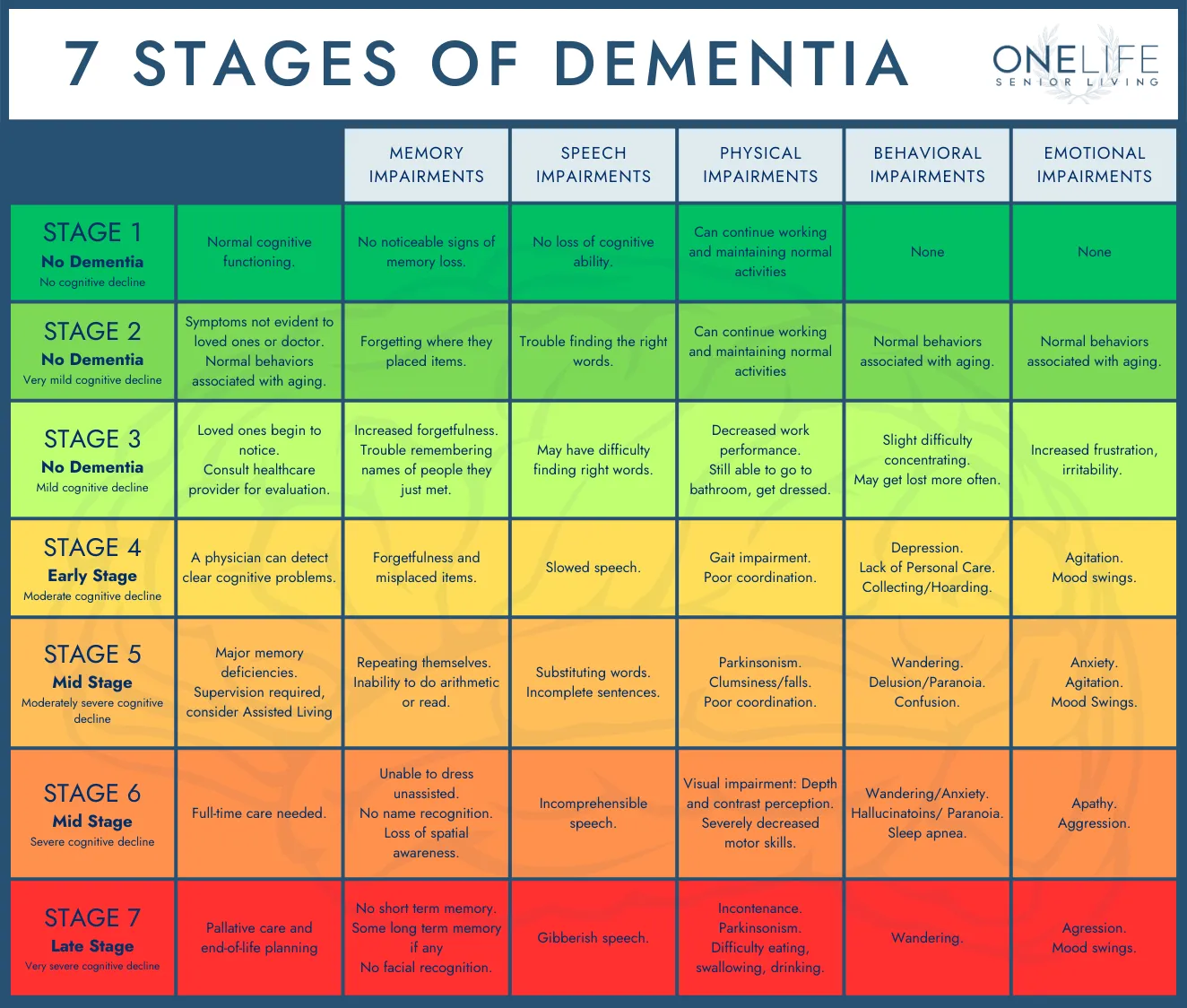
Late-stage dementia is the final phase of the condition, often corresponding to stages 6 and 7 on the commonly used dementia scale. At this stage, individuals typically require assistance with nearly all daily activities and may lose the ability to communicate clearly.
👉 Learn more about the full progression in our guide to the 7 stages of dementia
COMMON SYMPTOMS OF LATE-STAGE DEMENTIA
In late-stage dementia, symptoms become more severe and may include:
- Severe memory loss
- Difficulty recognizing loved ones
- Limited speech or inability to communicate
- Increased confusion and disorientation
- Changes in mood or behavior
- Difficulty eating or swallowing
- Loss of mobility
Can someone with dementia still communicate in late stages?
Communication may become very limited, but individuals can often still respond to tone, touch, and familiar voices.
HOW DEMENTIA CHANGES IN THE FINAL STAGE
As dementia progresses into the late stage, both cognitive and physical abilities decline.
- Cognitive function becomes significantly impaired
- Individuals may lose awareness of their surroundings
- Physical health often declines, increasing medical needs
- Daily routines require full assistance
👉 Learn more about how fast dementia progresses
CARE NEEDS IN LATE-STAGE DEMENTIA
At this stage, care becomes more intensive and focused on comfort and safety.
Common care needs include:
- Assistance with eating, bathing, and dressing
- Medication management
- Mobility support
- Monitoring for health complications
- Emotional reassurance and comfort
Structured environments with trained caregivers can provide consistent support and reduce stress for both residents and families.
HOW TO SUPPORT A LOVED ONE IN LATE-STAGE DEMENTIA
Even in advanced stages, meaningful connection is still possible.
- Speak calmly and clearly
- Use touch and nonverbal communication
- Play familiar music or sounds
- Maintain a consistent routine
- Focus on comfort and emotional reassurance
👉 Engaging in simple activities for people with dementia can still provide comfort and connection.
HOW FAMILIES CAN PREPARE
Preparing for late-stage dementia can feel overwhelming, but planning ahead can help ease the transition.
- Understand care needs will increase significantly
- Consider long-term or memory care options
- Discuss preferences with family members
- Focus on quality of life and comfort
In memory care communities, structured routines and personalized support help ensure individuals receive the care they need while maintaining dignity and comfort.
RELATED TOPICS
- Understanding the 7 stages of dementia
- How fast dementia progresses
- Signs dementia is getting worse
- Late-stage dementia: what to expect
- How to care for someone at each stage
FREQUENTLY ASKED QUESTIONS
How long does late-stage dementia last?
Late-stage dementia typically lasts 1 to 3 years, though this can vary depending on the individual and type of dementia.
What are signs someone is in late-stage dementia?
Signs include severe memory loss, limited communication, difficulty eating, and the need for full-time care.
Can someone with late-stage dementia still recognize family?
Recognition may be limited, but emotional responses to familiar people can still occur.
What type of care is needed in late-stage dementia?
Full-time care is usually required, including assistance with daily activities, medical support, and supervision.
If your loved one is entering late-stage dementia, you’re not alone. Exploring memory care options can help ensure they receive the support, safety, and comfort they need during this stage.
Choosing the Right Care for Your Loved One
Selecting the right senior care community for your loved one is an important decision, and at ONELIFE Senior Living, we are here to guide you through every step of the process. We understand that navigating options for assisted living and memory care can feel overwhelming, but our compassionate team is ready to provide the support and information you need to make the best choice for your family.
Our approach begins with carefully assessing your loved one’s unique needs and circumstances. With a variety of communities offering distinct amenities and care services, we help match your family member to the environment and level of support that will best enhance their quality of life. For those with memory-related conditions, we craft personalized memory care plans that address their specific challenges while promoting dignity, comfort, and engagement.
Whether you’re exploring assisted living for help with daily activities or specialized memory care for Alzheimer’s or other forms of dementia, we’ll work closely with you to determine the most beneficial care path. If you’re unsure where to start, we invite you to contact us to schedule a consultation with our team. Together, we can discuss your loved one’s needs, explore our services, and provide guidance to help you make a confident, informed decision. At ONELIFE Senior Living, we’re here to ensure your loved one receives the exceptional care they deserve.
Explore ONELIFE Communities Near You
ONELIFE Senior Living is proud to serve families in multiple regions, offering exceptional care and support tailored to each resident’s needs. In Springfield, Oregon, The Esther at Riverbend Assisted Living provides personalized assisted living services, while The Rawlin at Riverbend Memory Care specializes in compassionate Alzheimer’s and dementia care. Families in Salem can find trusted support at Battle Creek Memory Care, and those in Beaverton benefit from the warm, secure environment at Waterhouse Ridge Memory Care.
For families in Nevada, Vineyard Henderson Memory Care offers expert dementia care in the heart of Henderson, while in California, The Reserve at Fountaingrove Memory Care provides high-quality memory support in Santa Rosa, and The Woodlake Senior Living serves Sacramento with a full spectrum of senior living options. In Cottage Grove, Oregon, Middlefield Oaks Senior Living combines independence and care, while in the Midwest, The Laurel at Vernon Hills Memory Care stands as a dedicated resource for families in Vernon Hills, Illinois. Finally, in Phoenix, Arizona, Shadow Mountain Memory Care delivers compassionate, all-inclusive memory care in a safe and engaging setting.
No matter which location you choose, every ONELIFE community is united by the same mission: providing exceptional care, meaningful activities, and a true sense of family for residents and loved ones.