June Is Alzheimer's & Brain Awareness Month
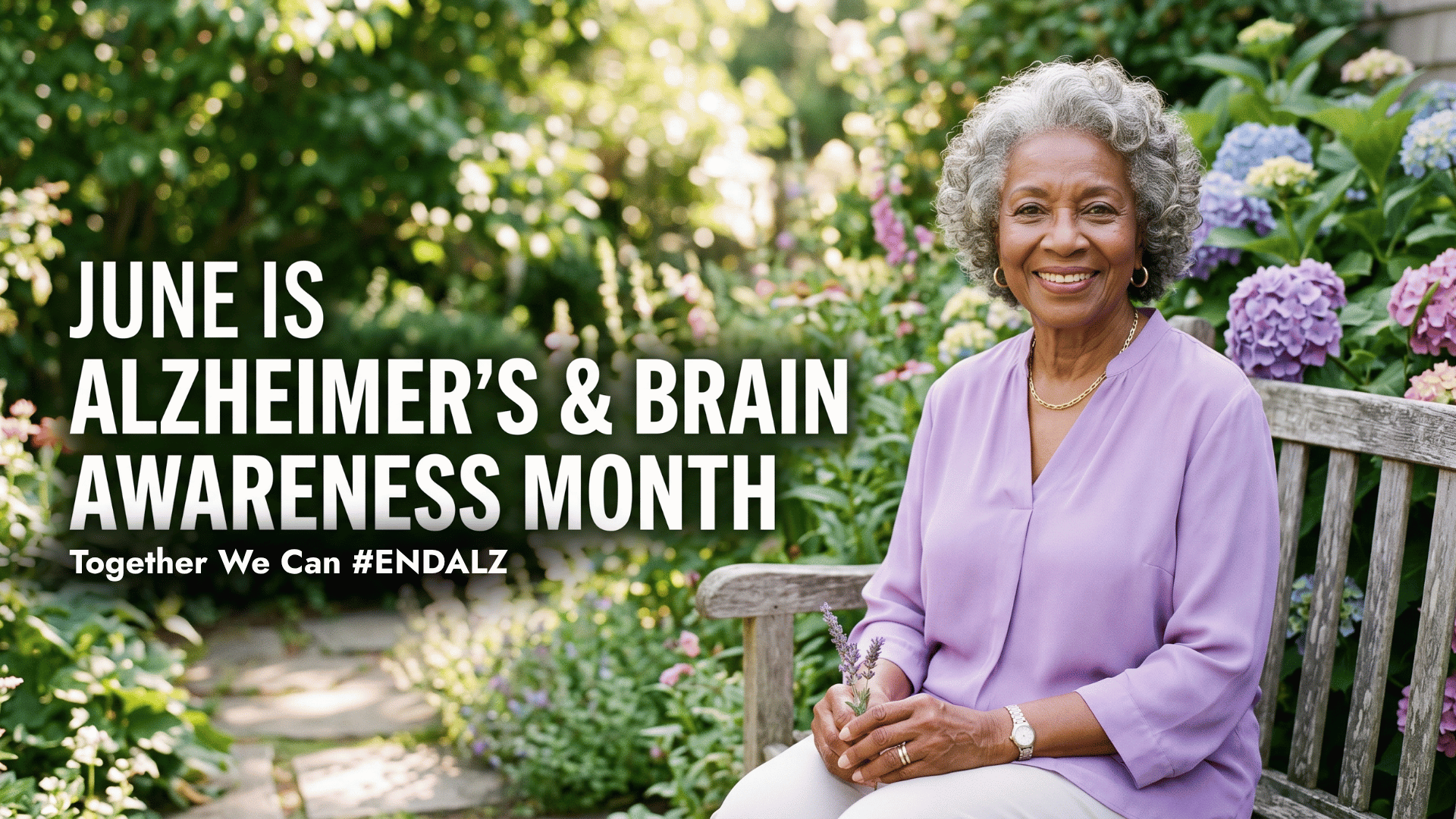
Every June, families, healthcare professionals, and advocates across the nation recognize Alzheimer's & Brain Awareness Month, a time dedicated to increasing understanding, promoting brain health, and supporting the millions of individuals and families affected by Alzheimer's disease and other forms of dementia.
At ONELIFE Senior Living, we believe education is one of the most powerful tools families have when navigating memory loss. Understanding the early signs of cognitive decline, knowing the difference between Alzheimer's and dementia, and recognizing when additional support may be needed can help families make informed decisions that improve quality of life and long-term outcomes.
Alzheimer's by the Numbers: Why Awareness Matters
Alzheimer's disease is one of the fastest-growing health challenges facing older adults today.
According to the Alzheimer's Association:
- More than 7 million Americans age 65 and older are living with Alzheimer's disease.
- Nearly 1 in 9 people age 65 and older has Alzheimer's.
- Alzheimer's is currently the seventh leading cause of death in the United States.
- More than 11 million Americans provide unpaid care for loved ones living with Alzheimer's or dementia.
- By 2050, the number of Americans living with Alzheimer's is projected to nearly double if no medical breakthroughs occur.
These statistics represent more than numbers—they represent families, relationships, and lives affected by memory loss every day.
Taking Charge of Your Brain Health
While age remains the greatest known risk factor for Alzheimer's disease, research continues to show that healthy lifestyle choices may help support cognitive health and reduce the risk of cognitive decline.
Taking charge of brain health means being proactive rather than reactive.
Healthy Habits That Support Brain Health
Stay Physically Active
Regular exercise increases blood flow to the brain and may help reduce the risk of cognitive decline. Even moderate activities such as walking, gardening, dancing, or swimming can provide meaningful benefits.
Keep Your Mind Engaged
Reading, puzzles, learning new skills, music, art, and social activities help stimulate the brain and promote cognitive resilience.
Prioritize Social Connection
Isolation and loneliness have been linked to increased cognitive decline. Maintaining meaningful relationships and participating in community activities can support emotional and brain health.
Focus on Heart Health
What is good for the heart is often good for the brain. Managing blood pressure, cholesterol, diabetes, and maintaining a healthy weight can contribute to overall cognitive wellness.
Prioritize Quality Sleep
Sleep plays a critical role in memory consolidation and brain function. Chronic sleep deprivation may increase the risk of cognitive impairment over time.
Alzheimer's vs. Dementia: Understanding the Difference
One of the most common misconceptions is that Alzheimer's and dementia are the same thing.
They are not.
What Is Dementia?
Dementia is not a specific disease. It is a general term used to describe a decline in cognitive abilities severe enough to interfere with daily life.
Symptoms may include:
- Memory loss
- Difficulty communicating
- Problems with reasoning and judgment
- Confusion
- Changes in behavior or personality
- Difficulty performing familiar tasks
There are several types of dementia, including:
- Alzheimer's disease
- Vascular dementia
- Lewy body dementia
- Frontotemporal dementia
- Mixed dementia
What Is Alzheimer's Disease?
Alzheimer's disease is the most common cause of dementia, accounting for approximately 60% to 80% of dementia cases.
Alzheimer's is a progressive brain disease that gradually destroys memory, thinking skills, and eventually the ability to carry out everyday tasks.
Simply put:
All Alzheimer's disease is dementia, but not all dementia is Alzheimer's disease.
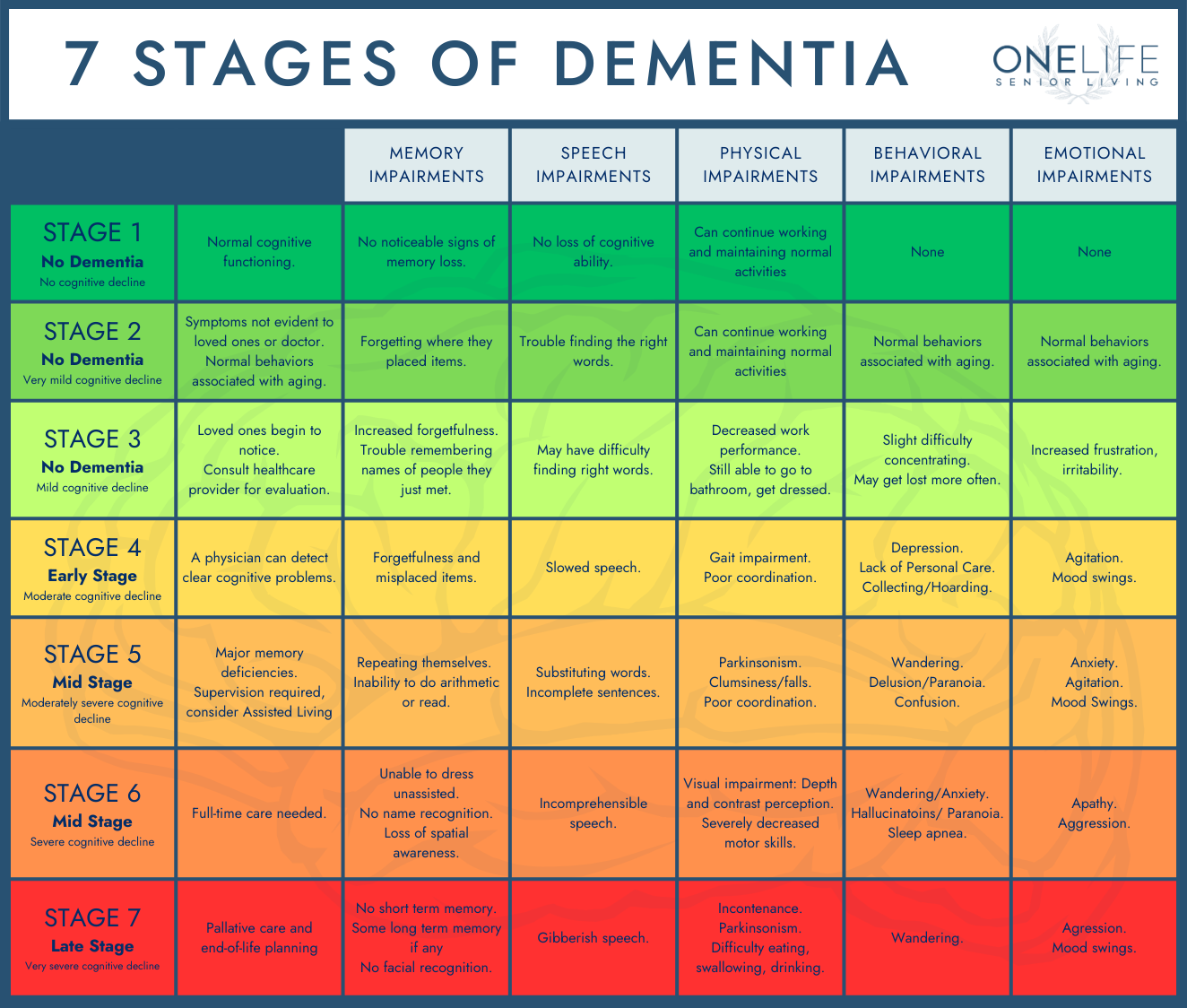
Understanding the Stages of Dementia
While every individual's journey is unique, dementia typically progresses through three general stages.
Early Stage Dementia
In the early stage, symptoms may be subtle and often mistaken for normal aging.
Common signs include:
- Forgetting recent conversations
- Misplacing items
- Difficulty finding words
- Trouble managing finances
- Increased reliance on reminders
- Mild confusion with time or place
Many individuals remain independent during this stage.
Middle Stage Dementia
As dementia progresses, symptoms become more noticeable.
Families may observe:
- Increased memory loss
- Difficulty recognizing familiar people
- Challenges with personal care
- Repetitive questions
- Wandering behaviors
- Mood changes and anxiety
- Difficulty following conversations
This stage often places significant demands on family caregivers.
Late Stage Dementia
In the advanced stage, individuals typically require extensive assistance and support.
Symptoms may include:
- Limited verbal communication
- Significant memory loss
- Loss of mobility
- Difficulty swallowing
- Dependence on others for daily care
- Increased vulnerability to illness
Professional care and specialized support become increasingly important during this stage.
Early Warning Signs Families Should Never Ignore
One of the greatest misconceptions surrounding dementia is that memory loss is simply a normal part of aging.
While occasional forgetfulness can occur with age, persistent cognitive changes should not be ignored.
10 Early Signs of Alzheimer's Disease
- Memory loss that disrupts daily life
- Difficulty completing familiar tasks
- Challenges with planning or problem-solving
- Confusion with time or place
- Trouble understanding visual images or spatial relationships
- New problems with speaking or writing
- Frequently misplacing items and being unable to retrace steps
- Poor judgment or decision-making
- Withdrawal from social activities
- Changes in mood, personality, or behavior
If multiple signs are present, it is important to seek a professional evaluation.
Why Early Detection Matters
Early diagnosis can significantly impact a person's quality of life.
Benefits of early detection include:
- Access to treatment options sooner
- Better symptom management
- More time to participate in care decisions
- Opportunities to plan financially and legally
- Access to supportive services and resources
- Reduced stress for family caregivers
The earlier cognitive changes are identified, the sooner families can begin building a support plan.
The Hidden Cost of Waiting Too Long for Memory Care Support
Many families delay seeking memory care because they feel guilty, overwhelmed, or uncertain about what comes next.
Unfortunately, waiting too long can create additional challenges.
As dementia progresses, caregiving responsibilities often become increasingly complex and demanding. Family caregivers may experience:
- Physical exhaustion
- Emotional burnout
- Increased stress and anxiety
- Safety concerns within the home
- Social isolation
- Declining health of the caregiver
Meanwhile, the individual living with dementia may experience:
- Increased confusion
- Falls and injuries
- Medication management challenges
- Nutritional concerns
- Social withdrawal
- Reduced quality of life
The Benefits of Earlier Memory Care Support
Specialized memory care communities are designed to support individuals living with Alzheimer's and dementia through:
- Structured daily routines
- Purposeful life enrichment programs
- Cognitive engagement activities
- Enhanced safety and security
- Personalized care plans
- Social connection opportunities
- Professional support from trained caregivers
When families seek support earlier, residents often have more opportunities to adjust successfully, build relationships, and participate in meaningful activities that promote engagement and well-being.
Supporting Families Through Every Stage
At ONELIFE Senior Living, we understand that a dementia diagnosis affects the entire family—not just the individual receiving care.
Our specialized memory care communities are built around compassion, dignity, connection, and person-centered care. Through purposeful programming, supportive environments, and dedicated caregivers, we help residents experience meaningful moments, daily engagement, and an enhanced quality of life.
A Final Thought This Alzheimer's & Brain Awareness Month
June serves as an important reminder that brain health matters at every age.
Whether you are focused on prevention, supporting a loved one experiencing memory changes, or navigating an Alzheimer's diagnosis, knowledge empowers action.
By recognizing the early warning signs, understanding the stages of dementia, and seeking support when needed, families can make informed decisions that positively impact both their loved one's journey and their own well-being.
This Alzheimer's & Brain Awareness Month, take time to learn, start important conversations, and prioritize brain health. Early action can make a meaningful difference.
Explore ONELIFE Communities Near You
ONELIFE Senior Living is proud to serve families in multiple regions, offering exceptional care and support tailored to each resident’s needs. In Springfield, Oregon, The Esther at Riverbend Assisted Living provides personalized assisted living services, while The Rawlin at Riverbend Memory Care specializes in compassionate Alzheimer’s and dementia care. Families in Salem can find trusted support at Battle Creek Memory Care, and those in Beaverton benefit from the warm, secure environment at Waterhouse Ridge Memory Care.
For families in Nevada, Vineyard Henderson Memory Care offers expert dementia care in the heart of Henderson, while in California, The Reserve at Fountaingrove Memory Care provides high-quality memory support in Santa Rosa, and The Woodlake Senior Living serves Sacramento with a full spectrum of senior living options. In Cottage Grove, Oregon, Middlefield Oaks Senior Living combines independence and care, while in the Midwest, The Laurel at Vernon Hills Memory Care stands as a dedicated resource for families in Vernon Hills, Illinois. Finally, in Phoenix, Arizona, Shadow Mountain Memory Care delivers compassionate, all-inclusive memory care in a safe and engaging setting.
No matter which location you choose, every ONELIFE community is united by the same mission: providing exceptional care, meaningful activities, and a true sense of family for residents and loved ones.
Contact us
learn more about our
community

More Articles & Resources
.png)
.png)
.png)

.avif)
EXPLORE THE ONELIFE COMMUNITIES